


Translated in its simplest form, “aṣiṣe” (ashee-shay) in Yoruba means blunder, mistake or error. But the English language perennially fails to capture the nuances of certain Yoruba words. Aṣiṣe is deeper than a mere, everyday mistake. There is an element of unusualness to it, a bit of stupidity or an insinuation of operating under a spell. And, to make matters worse, aṣiṣe can go on and on even when the blunder is obvious to all. When you look at where Nigeria is today and how it got here and why it remains here, you cannot but fall for the temptation of accepting that the spirit of aṣiṣe has continued to hold us down. We have to banish it as a matter of urgent national importance.
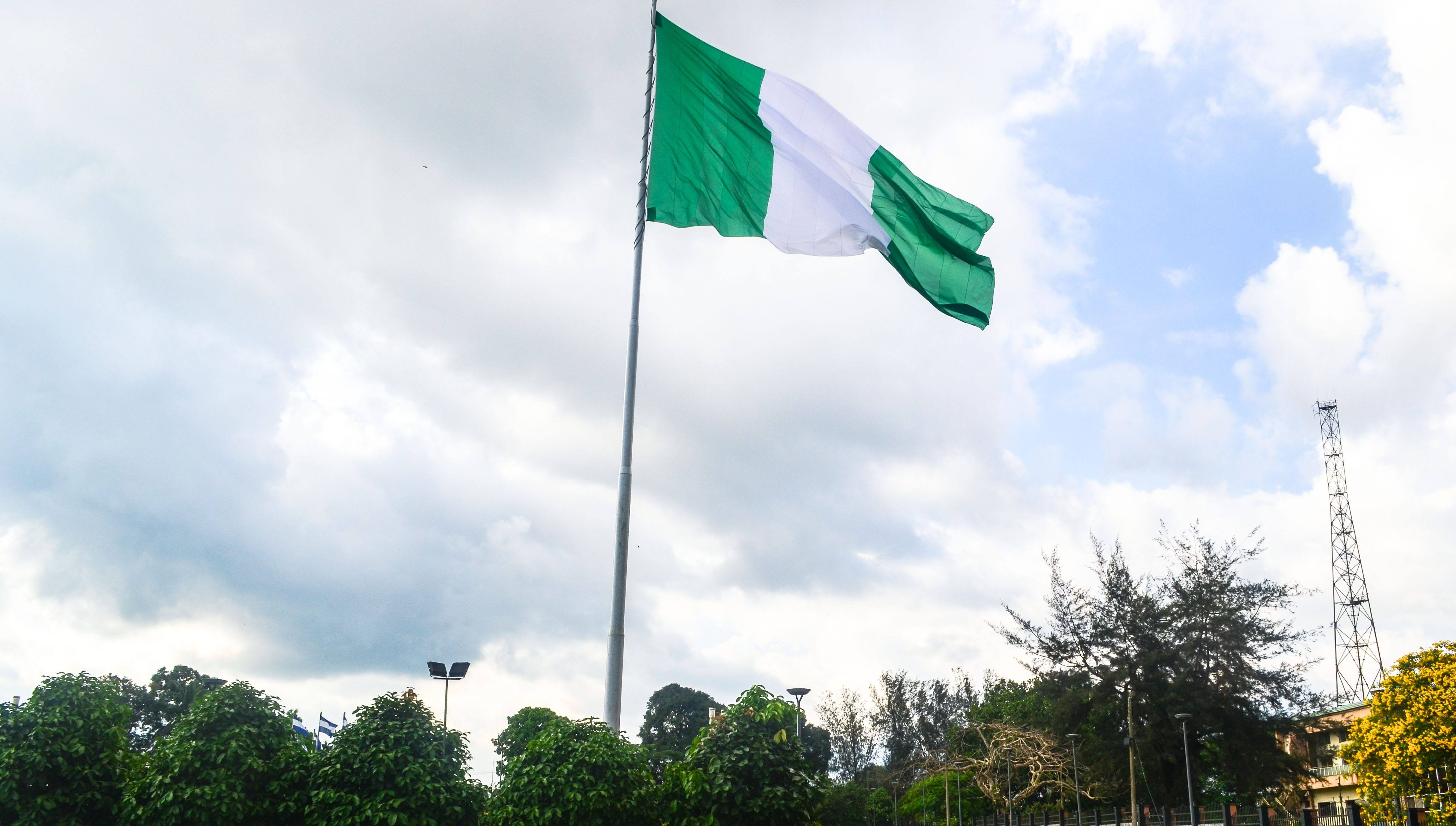
Sorry, I am not talking about the 2023 general election or who is likely to be the next president. Maybe that is part of the problem. Maybe. But we have been electing presidents and governors and legislators over and over and the simplest things still look like rocket science. I do not for one minute suggest that Nigeria has not made progress or is not making progress — I don’t belong to that group of commentators. I would typically say we have made progress in many areas but we are speeding at 10kmph on a 100kmph road. Also, we sometimes take one step forward and two backward in many areas of our national life. But it is not gloom and doom all the time as some tend to suggest.
The current situation in the global oil market is the immediate trigger for this article. I recently wrote: “Oil is $100 and We Are Not Smiling” (THISDAY, February 27, 2022). In it, I highlighted how, for the first time in our history, crude oil prices are going up and there are basically no benefits for Nigeria. Revenue is not going up. Dollar reserves are not going up. Excess crude savings are not going up. If they are going up at all, the difference is so insignificant — like a grain of sand dropping on the seashore. Gone are the days, I argued, when high oil prices brought us joy. At a time in our history, FX reserves went as high as $62bn, with the excess oil revenue component alone standing at $20bn.
Why are we in this mess? I said our oil production has been going down. A country that was doing 2.2m barrels/day only a few years ago is now struggling to pump 1.2m barrels/day. We are, thus, losing in quantity and revenue. Two, our share of oil output is now so miserable: less than 30 percent, according to the latest figures released by the Nigerian National Petroleum Corporation (NNPC). Three, even our little share goes mostly into financing subsidy so that we can buy petrol at N165/litre, although most Nigerians pay far more than that. Four, as a result of this unending aṣiṣe, there’s little accrual to the federation account and many states now owe salaries and pensions.
The Russia-Ukraine war has triggered another round of thinking in me on the consequences of aṣiṣe on the Federal Republic of Nigeria. Many Western countries are desperately trying to move away from dependency on Russia for oil and gas. Nigeria should naturally be one of their ports of call. But we are nowhere to be found. Our low oil production means we do not have the capacity to play big on the global stage. How can you give what you don’t have? As of 1973, Nigeria was pumping 2m barrels/day and there were projections we would hit between 3m and 4m by 1976. Although we didn’t, we maintained 2m for decades. Today, we do roughly 1.2m. Is this a sign of progress?
Why have we gone so low? There are possibly a million and one reasons, but the naked truth is that investment has been dropping in the upstream sector for decades. We introduced the petroleum industry bill (PIB) in 2008 with the stated purpose of reforming the sector and making it conform to modern global governance and fiscal standards. Our leaders, mostly in the legislature, kept playing games (under the influence?) and allowed the bill to gather dust for ages. International investors, unsure of the laws under which they would be operating, held back their capital. There was bound to be consequences. In the year 2022, we are seeing and suffering the consequences of the aṣiṣe.
The JVs that used to deliver 800,000 barrels/day to the federation now yield a miserly 200,000 or so. Why? The oil companies are not in Nigeria to count bridges. They are here for business. For one, Nigeria perpetually failed to fund its own share of the cost of oil production, what we call “cash calls”. We can’t be doing joint business while you continue to fail to play your part and expect to be reaping the same reward. Two, attacks on oil facilities onshore make life miserable for the oil companies. Offshore production is more financially rewarding for oil companies because of the terms and because they do not have to deal with host community issues, vandalism and theft.
What about gas? We should be thankful that we have not been able to destroy the Nigeria NLG project with our spirit of aṣiṣe, although I must admit here that the Nigerian Maritime Administration and Safety Agency (NIMASA) did everything possible to ruin the project in 2013 by blockading NLNG cargoes because of a dispute over $140m fees. Read that again. An investment that regularly delivers $1bn in annual dividends to the Federal Republic of Nigeria was being impeded by a government agency over a dispute that could be resolved over a pot of coffee and a few biscuits. This is not just classic aṣiṣe — there is an èdì element to it, as if we are under a spell.
Back to Ukraine. With Western countries now looking elsewhere for gas, Nigeria should be a natural shop for them. We have the 9th largest gas reserves in the world and hold nearly a third of Africa’s proven reserves. It is a known fact that we have far more gas than oil. There is the associated gas that comes with oil production and there is the natural gas. We have gas aplenty. But we are importing liquified petroleum gas, the one we call cooking gas. We are unable to produce enough gas for local consumption much less have extra to export. I do not deny the fact that we are making some progress in exploring the gas potential, but we have no business being where we are today.
Should I talk about the refineries? No. I will let it pass. From the time of Gen Sani Abacha till this day, we have been repairing refineries regularly with billions of dollars and also importing petroleum products regularly with billions of dollars. What we have paid for demurrage alone on fuel imports in the last 10 years could build a number of refineries. It is not that the policy makers do not know this fact — but when you are under the spirit of aṣiṣe, you will be committing one blunder after the other. Of course, people sometimes do things for selfish reasons because of the opportunity to profit, but how much money does a human being need in a lifetime? The aṣiṣe is in the brain.
Let’s leave oil and gas aside and briefly go green. I mean agriculture. Sometime in 2009, late Dr. Sayyadi Abba Ruma, then minister of agriculture and water resources, took me through some dizzying statistics on our potential. This depressed me for days. He said we were the world’s largest producer of cassava at 40m metric tonnes per year. But while the world’s average yield per hectare was 100 tonnes, we were doing less than 20 tonnes. That meant we could do far more than we were doing. More so, the post-harvest loss was huge because cassava has to be dewatered within 24 hours, if not it would start fermenting. He didn’t need to tell me how much more we could do.
Ruma said Nigeria’s shrimps were adjudged the best in the world and that we had a potential to produce 6m metric tonnes yearly but we were doing only 600,000. He said Saudi Arabia was importing over 10 million rams and goats for the annual sacrifice during Hajj, but Nigeria was not benefiting from the $2 billion business as at then. Nigeria was the world’s 15th largest producer of tomato, he said, but our yield per hectare was a mere 16-20 tonnes because of technical and economic constrains — compared to the global average of 150 tonnes. Over 70 per cent of our produce was lost post-harvest, he said, because of poor grave storage and transportation difficulties.
Ruma was not lamenting over all these statistics. Rather, he was telling me Nigeria’s huge agricultural potential while explaining his plans and programmes to me. Really, Nigeria can be great. Some things are so simple, clear and doable. Nigeria should be refining petroleum products and selling to the whole of Africa. Singapore does not have crude oil but it is the hub for refining in Asia. Given our potential, Nigeria should be feeding the whole of Africa with tomato, yam and cassava. I agree we have recorded big progress in rice farming as a result of CBN’s much-criticised anchor borrowers programme, but we need to ask ourselves what took us to long to wake up.
I have deliberately avoided talking about solid minerals. That is even more depressing. But if we are going to stop lamenting, we must cast out the spirit of aṣiṣe. To be clear, I am not saying we have a spiritual problem. That job is for clerics. The spirit of aṣiṣe that I am talking about lives in the brain. We do not have the right values. We place personal and sectional interests above national development. Except we begin to think and act in a new way, we will continue to move from aṣiṣe to aṣiṣe — as if we are under èdì. We can never cast out the spirit of aṣiṣe as long as we keep voting the wrong people into power at all levels. We cannot sow pounded yam and expect to reap yam.
AND FOUR OTHER THINGS…
ACID TEST
The All Progressives Congress (APC) faced a major test of its resilience yesterday as it held its national convention to elect officers who will lead the party to the 2023 general election. Everything that happens in APC is everybody’s business — it is the ruling party and the fortunes of Nigerians depend largely on its action and inaction. APC may not look healthy, but with 22 states under its control, it is still the party to beat. I think the major forces in the party managed to paper over the cracks to hold a rancour-free convention, but the real test is how it manages the different tendencies before and after the presidential and governorship primaries in May/June. Crunchy.
SWEET STRIKE
The joint action committee of the Senior Staff Association of Nigerian Universities (SSANU) and Non-Academic Staff Union of Allied and Educational Institutions (NASU) on Friday declared a two-week warning strike. They say they are protesting the “nonchalant attitude” of the federal government to their demands. The Academic Staff Union of Nigerian Universities (ASUU) is already on an endless strike — or “paid vacation”, as Dr Chidi Amuta puts it. Although there are several issues with our university system which have to be addressed, I maintain that strikes create more problems than they solve. But when you are fully paid while on strike, the incentive is unmistakable. Perverse.
DSTV SUBSIDY
With the way Nigerian government agencies get excited over anything DStv, we would soon have to create a Ministry of DStv Affairs. Although every sector of the economy is witnessing price hikes because of the adverse economic situation (even the price of pure water has gone up), we insist DStv should not be allowed to add even one kobo to its rates — although it pays for rights to foreign programmes in dollars. I am getting the impression that subscription TV is now officially regarded as essential commodity. I won’t be surprised if one lawmaker comes up with the idea of “DStv subsidy” to “protect the poor” — the same way we are raising Eurobonds to pay for petrol subsidy. Comical.
NIGERIA VS GHANA
The Super Eagles, after a promising but disappointing outing at Afcon, look poised to qualify for Qatar 2022 World Cup after a gritty away display against Ghana on Friday. I do not want to get ahead of myself because anything can still happen in the second leg in Abuja on Tuesday, but I am cautiously hopeful that the Eagles can get their groove back after a spell of indifferent performances. They are an excellent collection of players but the technical input from the bench still leaves much to be desired. It seems we have only one dimension to our game, as we saw again in the goalless draw. Even if we qualify this way, we need a lot of rejigging to make an impact at the World Cup. Go!

Translated in its simplest form, “aṣiṣe” (ashee-shay) in Yoruba means blunder, mistake or error. But the English language perennially fails to capture the nuances of certain Yoruba words. Aṣiṣe is deeper than a mere, everyday mistake. There is an element of unusualness to it, a bit of stupidity or an insinuation of operating under a spell. And, to make matters worse, aṣiṣe can go on and on even when the blunder is obvious to all. When you look at where Nigeria is today and how it got here and why it remains here, you cannot but fall for the temptation of accepting that the spirit of aṣiṣe has continued to hold us down. We have to banish it as a matter of urgent national importance.
Sorry, I am not talking about the 2023 general election or who is likely to be the next president. Maybe that is part of the problem. Maybe. But we have been electing presidents and governors and legislators over and over and the simplest things still look like rocket science. I do not for one minute suggest that Nigeria has not made progress or is not making progress — I don’t belong to that group of commentators. I would typically say we have made progress in many areas but we are speeding at 10kmph on a 100kmph road. Also, we sometimes take one step forward and two backward in many areas of our national life. But it is not gloom and doom all the time as some tend to suggest.
The current situation in the global oil market is the immediate trigger for this article. I recently wrote: “Oil is $100 and We Are Not Smiling” (THISDAY, February 27, 2022). In it, I highlighted how, for the first time in our history, crude oil prices are going up and there are basically no benefits for Nigeria. Revenue is not going up. Dollar reserves are not going up. Excess crude savings are not going up. If they are going up at all, the difference is so insignificant — like a grain of sand dropping on the seashore. Gone are the days, I argued, when high oil prices brought us joy. At a time in our history, FX reserves went as high as $62bn, with the excess oil revenue component alone standing at $20bn.
Why are we in this mess? I said our oil production has been going down. A country that was doing 2.2m barrels/day only a few years ago is now struggling to pump 1.2m barrels/day. We are, thus, losing in quantity and revenue. Two, our share of oil output is now so miserable: less than 30 percent, according to the latest figures released by the Nigerian National Petroleum Corporation (NNPC). Three, even our little share goes mostly into financing subsidy so that we can buy petrol at N165/litre, although most Nigerians pay far more than that. Four, as a result of this unending aṣiṣe, there’s little accrual to the federation account and many states now owe salaries and pensions.
The Russia-Ukraine war has triggered another round of thinking in me on the consequences of aṣiṣe on the Federal Republic of Nigeria. Many Western countries are desperately trying to move away from dependency on Russia for oil and gas. Nigeria should naturally be one of their ports of call. But we are nowhere to be found. Our low oil production means we do not have the capacity to play big on the global stage. How can you give what you don’t have? As of 1973, Nigeria was pumping 2m barrels/day and there were projections we would hit between 3m and 4m by 1976. Although we didn’t, we maintained 2m for decades. Today, we do roughly 1.2m. Is this a sign of progress?
Why have we gone so low? There are possibly a million and one reasons, but the naked truth is that investment has been dropping in the upstream sector for decades. We introduced the petroleum industry bill (PIB) in 2008 with the stated purpose of reforming the sector and making it conform to modern global governance and fiscal standards. Our leaders, mostly in the legislature, kept playing games (under the influence?) and allowed the bill to gather dust for ages. International investors, unsure of the laws under which they would be operating, held back their capital. There was bound to be consequences. In the year 2022, we are seeing and suffering the consequences of the aṣiṣe.
The JVs that used to deliver 800,000 barrels/day to the federation now yield a miserly 200,000 or so. Why? The oil companies are not in Nigeria to count bridges. They are here for business. For one, Nigeria perpetually failed to fund its own share of the cost of oil production, what we call “cash calls”. We can’t be doing joint business while you continue to fail to play your part and expect to be reaping the same reward. Two, attacks on oil facilities onshore make life miserable for the oil companies. Offshore production is more financially rewarding for oil companies because of the terms and because they do not have to deal with host community issues, vandalism and theft.
What about gas? We should be thankful that we have not been able to destroy the Nigeria NLG project with our spirit of aṣiṣe, although I must admit here that the Nigerian Maritime Administration and Safety Agency (NIMASA) did everything possible to ruin the project in 2013 by blockading NLNG cargoes because of a dispute over $140m fees. Read that again. An investment that regularly delivers $1bn in annual dividends to the Federal Republic of Nigeria was being impeded by a government agency over a dispute that could be resolved over a pot of coffee and a few biscuits. This is not just classic aṣiṣe — there is an èdì element to it, as if we are under a spell.
Back to Ukraine. With Western countries now looking elsewhere for gas, Nigeria should be a natural shop for them. We have the 9th largest gas reserves in the world and hold nearly a third of Africa’s proven reserves. It is a known fact that we have far more gas than oil. There is the associated gas that comes with oil production and there is the natural gas. We have gas aplenty. But we are importing liquified petroleum gas, the one we call cooking gas. We are unable to produce enough gas for local consumption much less have extra to export. I do not deny the fact that we are making some progress in exploring the gas potential, but we have no business being where we are today.
Should I talk about the refineries? No. I will let it pass. From the time of Gen Sani Abacha till this day, we have been repairing refineries regularly with billions of dollars and also importing petroleum products regularly with billions of dollars. What we have paid for demurrage alone on fuel imports in the last 10 years could build a number of refineries. It is not that the policy makers do not know this fact — but when you are under the spirit of aṣiṣe, you will be committing one blunder after the other. Of course, people sometimes do things for selfish reasons because of the opportunity to profit, but how much money does a human being need in a lifetime? The aṣiṣe is in the brain.
Let’s leave oil and gas aside and briefly go green. I mean agriculture. Sometime in 2009, late Dr. Sayyadi Abba Ruma, then minister of agriculture and water resources, took me through some dizzying statistics on our potential. This depressed me for days. He said we were the world’s largest producer of cassava at 40m metric tonnes per year. But while the world’s average yield per hectare was 100 tonnes, we were doing less than 20 tonnes. That meant we could do far more than we were doing. More so, the post-harvest loss was huge because cassava has to be dewatered within 24 hours, if not it would start fermenting. He didn’t need to tell me how much more we could do.
Ruma said Nigeria’s shrimps were adjudged the best in the world and that we had a potential to produce 6m metric tonnes yearly but we were doing only 600,000. He said Saudi Arabia was importing over 10 million rams and goats for the annual sacrifice during Hajj, but Nigeria was not benefiting from the $2 billion business as at then. Nigeria was the world’s 15th largest producer of tomato, he said, but our yield per hectare was a mere 16-20 tonnes because of technical and economic constrains — compared to the global average of 150 tonnes. Over 70 per cent of our produce was lost post-harvest, he said, because of poor grave storage and transportation difficulties.
Ruma was not lamenting over all these statistics. Rather, he was telling me Nigeria’s huge agricultural potential while explaining his plans and programmes to me. Really, Nigeria can be great. Some things are so simple, clear and doable. Nigeria should be refining petroleum products and selling to the whole of Africa. Singapore does not have crude oil but it is the hub for refining in Asia. Given our potential, Nigeria should be feeding the whole of Africa with tomato, yam and cassava. I agree we have recorded big progress in rice farming as a result of CBN’s much-criticised anchor borrowers programme, but we need to ask ourselves what took us to long to wake up.
I have deliberately avoided talking about solid minerals. That is even more depressing. But if we are going to stop lamenting, we must cast out the spirit of aṣiṣe. To be clear, I am not saying we have a spiritual problem. That job is for clerics. The spirit of aṣiṣe that I am talking about lives in the brain. We do not have the right values. We place personal and sectional interests above national development. Except we begin to think and act in a new way, we will continue to move from aṣiṣe to aṣiṣe — as if we are under èdì. We can never cast out the spirit of aṣiṣe as long as we keep voting the wrong people into power at all levels. We cannot sow pounded yam and expect to reap yam.
AND FOUR OTHER THINGS…
ACID TEST
The All Progressives Congress (APC) faced a major test of its resilience yesterday as it held its national convention to elect officers who will lead the party to the 2023 general election. Everything that happens in APC is everybody’s business — it is the ruling party and the fortunes of Nigerians depend largely on its action and inaction. APC may not look healthy, but with 22 states under its control, it is still the party to beat. I think the major forces in the party managed to paper over the cracks to hold a rancour-free convention, but the real test is how it manages the different tendencies before and after the presidential and governorship primaries in May/June. Crunchy.
SWEET STRIKE
The joint action committee of the Senior Staff Association of Nigerian Universities (SSANU) and Non-Academic Staff Union of Allied and Educational Institutions (NASU) on Friday declared a two-week warning strike. They say they are protesting the “nonchalant attitude” of the federal government to their demands. The Academic Staff Union of Nigerian Universities (ASUU) is already on an endless strike — or “paid vacation”, as Dr Chidi Amuta puts it. Although there are several issues with our university system which have to be addressed, I maintain that strikes create more problems than they solve. But when you are fully paid while on strike, the incentive is unmistakable. Perverse.
DSTV SUBSIDY
With the way Nigerian government agencies get excited over anything DStv, we would soon have to create a Ministry of DStv Affairs. Although every sector of the economy is witnessing price hikes because of the adverse economic situation (even the price of pure water has gone up), we insist DStv should not be allowed to add even one kobo to its rates — although it pays for rights to foreign programmes in dollars. I am getting the impression that subscription TV is now officially regarded as essential commodity. I won’t be surprised if one lawmaker comes up with the idea of “DStv subsidy” to “protect the poor” — the same way we are raising Eurobonds to pay for petrol subsidy. Comical.
NIGERIA VS GHANA
The Super Eagles, after a promising but disappointing outing at Afcon, look poised to qualify for Qatar 2022 World Cup after a gritty away display against Ghana on Friday. I do not want to get ahead of myself because anything can still happen in the second leg in Abuja on Tuesday, but I am cautiously hopeful that the Eagles can get their groove back after a spell of indifferent performances. They are an excellent collection of players but the technical input from the bench still leaves much to be desired. It seems we have only one dimension to our game, as we saw again in the goalless draw. Even if we qualify this way, we need a lot of rejigging to make an impact at the World Cup. Go!








An intriguing discussion is worth comment. I think that you should write more on this subject, it might not be a taboo subject but usually people don’t discuss such subjects. To the next! Kind regards!!
Great goods from you, man. I’ve understand your stuff prior to and you’re simply too fantastic. I really like what you’ve acquired here, really like what you’re stating and the way during which you are saying it. You make it entertaining and you still take care of to stay it sensible. I cant wait to read far more from you. This is actually a terrific site.
Heya i’m for the primary time here. I came across this board and I in finding It truly useful & it helped me out a lot. I am hoping to provide something back and help others like you helped me.
If you desire to take much from this article then you have to apply such strategies to your won website.